
Effective keyword research is crucial for small business growth. By identifying the right keywords, you can optimize your website, attract potential customers, and enhance your online presence.
Keyword research for small business involves understanding the search terms your target audience uses. This helps in driving relevant traffic to your site, ultimately leading to increased conversions and sales.
Long-Tail Keywords
Long-tail keywords are specific phrases that target niche audiences. They might have lower search volumes but tend to have higher conversion rates due to their precise nature.
Benefits of long-tail keywords include:
- Lower competition
- Higher conversion rates
- More targeted traffic
By the end of this guide, you’ll have a comprehensive understanding of how to leverage keyword strategies to enhance your online presence and drive small business growth.
Understanding Keyword Research
Keyword research is the process of identifying and analyzing the search terms that people enter into search engines. This practice is fundamental for creating content that resonates with your target audience. By understanding what potential customers are searching for, you can tailor your website’s content to meet their needs and preferences.
Keyword research helps in identifying search terms by pinpointing the exact words and phrases potential customers use when looking for products or services similar to yours. This insight allows you to align your content with users’ search intent, ensuring that your offerings are visible to those who are most likely to be interested in them.
But that’s not the half of it, keyword research plays a crucial role in website optimization. Properly targeted keyword research aids in making it easier for search engines to understand your content and rank it higher in search results. Enhanced visibility leads to increased organic traffic, as your site becomes more accessible to those seeking the information or products you provide.
Effective keyword research also directly impacts traffic generation by ensuring that your site appears for relevant searches. High-quality traffic driven by well-researched keywords typically results in better engagement and conversions, as visitors are more likely to find what they are looking for and take action on your site.
Understanding these elements allows you to strategically approach content creation, improving your chances of attracting and retaining visitors who are genuinely interested in what you offer. To maximize the benefits of keyword research, consider investing in premium website packages that are custom designed and optimized for SEO.
This can provide a significant boost to your organic search rankings, further increasing your visibility and driving more targeted traffic to your website. By incorporating relevant keywords into your site’s meta tags, headings, and throughout the content, you can signal to search engines that your website is a valuable resource for users searching for those specific terms. Ultimately, keyword research serves as the foundation for a well-optimized website that is more likely to attract qualified leads and generate higher conversion rates.
Identifying Relevant Keywords
Identifying relevant keywords begins with brainstorming seed keywords that align with your business offerings. Seed keywords are the foundation of your keyword research, representing broad terms related to your products or services. Start by listing down terms and phrases that you believe potential customers might use when searching for your business.
Understanding customer language and intent is crucial during this process. Engage in conversations with your customers, read reviews, and analyze competitors’ websites to get a sense of how people describe their needs and preferences. This helps in pinpointing the exact words and phrases they use, ensuring you target the right audience effectively.
Brainstorming Techniques:
Customer Feedback: Gather Insights from Customer Interactions
Customer feedback is an invaluable resource for understanding the language and intent of your audience. By engaging directly with customers through surveys, interviews, or informal conversations, you can uncover the specific words and phrases they use when discussing their needs and preferences. This information is crucial for identifying relevant keywords that resonate with your target audience. Additionally, customer feedback can reveal gaps in your current keyword strategy by highlighting features or services that are important to them but may not be prominently featured on your website. Regularly seeking out and analyzing customer feedback helps ensure that your keyword strategy remains aligned with the evolving preferences of your audience.
Competitor Analysis: Observe the Keywords Competitors Rank For
Conducting a thorough competitor analysis allows you to identify which keywords your competitors are successfully ranking for and how they are optimizing their content. By examining their websites, blog posts, and social media channels, you can gain insights into their keyword strategies, including both short-tail and long-tail keywords. Tools like Botify or Ahrefs can help you uncover these keywords and understand the search volume and difficulty associated with them. This competitive intelligence enables you to refine your own keyword strategy by identifying opportunities where you can outperform competitors or fill gaps they have overlooked. Staying informed about competitor activities ensures that your keyword approach remains competitive in the marketplace.
Industry Forums: Monitor Discussions in Niche Forums
Industry forums are rich sources of information where potential customers openly discuss challenges, solutions, and trends within a particular niche. By actively participating in or monitoring these forums, you can gain insights into the specific terminology and topics that matter most to your audience. Pay attention to frequently asked questions, popular discussion threads, and recurring themes as these can indicate emerging trends or shifts in consumer behavior. Incorporating this knowledge into your keyword research helps ensure that your website addresses the real concerns of your audience, positioning it as a valuable resource in their search journey.
Social Media: Analyze Trending Topics and Hashtags in Your Industry
- Social media platforms provide real-time insights into what is currently trending within an industry. By observing trending topics, hashtags, and user-generated content related to your niche, you can identify new keyword opportunities that align with current interests and discussions among consumers. Platforms like Twitter, Instagram, and LinkedIn offer tools for tracking trends and measuring engagement around specific topics or hashtags. This dynamic environment allows you to adapt quickly to changes in consumer sentiment or emerging trends by updating your keyword strategy accordingly. Leveraging social media insights ensures that your content remains relevant and engaging to a broader audience actively seeking information related to those trends.
By focusing on these techniques, you’ll generate a robust list of seed keywords that accurately reflect what potential customers are searching for, setting a solid foundation for your keyword strategy.
Using Keyword Research Tools
To effectively grow your small business through keyword research, it’s essential to use the right tools for actionable insights. Here are some popular options:
- Google Keyword Planner: A free tool that allows you to discover keywords related to your business and see estimates of search volume and competition levels.
- Ahrefs: Known for its comprehensive backlink analysis, Ahrefs also offers robust keyword research features, providing data on search volume, keyword difficulty, and potential traffic.
- SEMrush: A versatile tool that not only helps with keyword research but also provides insights into competitors’ strategies. SEMrush offers metrics like search volume, keyword difficulty, and trends over time.
- Moz Keyword Explorer: Focuses on delivering accurate search volume estimates and keyword suggestions. Moz also highlights the difficulty score to help you prioritize keywords.
These tools offer critical insights into search volume and competition:
- Search Volume: Indicates how often a keyword is searched within a given timeframe. High search volume suggests greater potential traffic but can also mean higher competition. It’s crucial to balance high search volume keywords with those that have lower competition to maximize your chances of ranking well.
- Keyword Difficulty: Reflects how hard it would be to rank for a particular keyword based on the number of competing sites and their authority. This metric helps prioritize efforts on keywords that offer the best balance between achievable ranking and traffic potential. Additionally, focusing on keywords with medium difficulty can often yield better results as they may offer substantial traffic without overwhelming competition.
- Long-Tail Keywords: These are typically longer and more specific keyword phrases that visitors are more likely to use when they’re closer to making a purchase or when using voice search. While they have lower search volumes, targeting long-tail keywords can lead to higher conversion rates due to their specificity and relevance.
- User Intent: Understanding the underlying intent behind search queries is crucial for effective keyword selection. Keywords can reflect different intents, such as informational, navigational, transactional, or commercial investigation. Aligning content with user intent ensures that you meet the needs of your audience effectively.
- Trends and Seasonality: Analyzing trends helps identify keywords that gain popularity during specific times of the year. Leveraging seasonal trends allows businesses to create timely content that captures interest during peak periods, enhancing engagement and conversions.
- Competitive Analysis: Examining competitors’ keywords provides insights into what’s working in your industry. By analyzing competitors’ strengths and weaknesses in keyword strategies, you can refine your approach to gain a competitive edge.
- Cost Per Click (CPC): Although primarily relevant for paid search campaigns, understanding CPC helps gauge the commercial value of keywords. High CPC indicates strong advertiser competition, which can also signify high-value keywords worth targeting organically.
Using these metrics effectively can guide your content strategy, ensuring you target keywords that balance user interest with achievable ranking potential.
Analyzing Metrics for Effective Keyword Selection
Search volume analysis is a vital aspect of keyword research. It indicates the number of times a particular keyword is searched within a given timeframe, providing insights into user interest and demand. High search volume can suggest popular topics but often comes with increased competition.
Keyword difficulty assessment evaluates how challenging it is to rank for a specific keyword. This metric considers factors like the strength and number of competitors already ranking for that term. Selecting keywords with balanced search volume and manageable difficulty ensures you’re targeting terms that are achievable to rank for while still driving traffic.
When analyzing these metrics:
High Search Volume + Low Difficulty
Keywords that exhibit a high search volume with low difficulty represent the ideal combination for driving substantial traffic to your website while facing less competition. These keywords are often referred to as “golden keywords” because they offer the best opportunity to attract a large audience without needing extensive resources or effort to rank highly in search engine results.
To effectively target these keywords, conduct thorough keyword research using tools like Google Keyword Planner or Ahrefs to identify terms with significant search interest that are not heavily contested by major players. Focus on creating high-quality, relevant content that directly addresses user queries associated with these keywords. Moreover, optimize your website’s on-page SEO elements such as meta tags, headers, and internal linking to further enhance your chances of ranking well.
Low Search Volume + Low Difficulty
Keywords with low search volume and low difficulty can be particularly useful for niche marketing or targeting highly specific content areas. While these terms may not drive massive amounts of traffic individually, they can collectively contribute to a steady stream of visitors who are highly interested and engaged with your content.
By focusing on these keywords, you can establish authority within niche markets and cater to an audience seeking specialized information. This approach is beneficial for businesses offering unique products or services that appeal to a targeted demographic. To capitalize on these opportunities, create detailed and informative content tailored to the specific interests of your niche audience and ensure that your SEO efforts focus on optimizing for relevancy rather than volume alone.
High Search Volume + High Difficulty
Keywords characterized by both high search volume and high difficulty are often dominated by major industry players or established websites with significant authority and resources. Competing for these terms requires substantial effort, including dedicated SEO strategies, comprehensive content creation, and potentially large investments in marketing campaigns.
If you choose to target these competitive keywords, be prepared for a long-term commitment involving continuous optimization and adaptation of your strategies. Consider leveraging advanced techniques such as building backlinks from reputable sources, engaging in influencer collaborations, or utilizing paid advertising options like Google Ads to gain visibility. Additionally, focus on differentiating your content by offering unique insights or perspectives that set you apart from existing competitors in the market.
By understanding these metrics, you can make informed decisions on which keywords will be most effective in your strategy.
Creating Keyword Buckets for Better Organization
Organizing keywords into categories or buckets based on themes relevant to your business can greatly enhance your SEO strategy. This method, known as keyword organization or thematic categorization, allows you to group similar keywords together, making it easier to manage and utilize them effectively.
Benefits of Keyword Buckets:
Improved Content Structure
Improved content structure is a significant benefit of keyword buckets. By grouping related keywords, you can create a more coherent and structured content plan. Each bucket acts as a category representing a specific topic or theme, ensuring that your content covers all relevant aspects of your business offerings comprehensively. This organization not only aids in planning but also makes it easier for search engines to understand the context and relevance of your content, potentially improving your rankings.
Enhanced Audience Targeting
Enhanced audience targeting is another critical advantage provided by thematic categorization. By organizing keywords into focused groups, you gain insights into the various segments of your audience. This understanding allows you to tailor your content to address the unique needs, interests, and pain points of each segment effectively. As a result, your marketing strategies become more personalized and targeted, leading to improved user engagement, higher conversion rates, and ultimately greater customer satisfaction.
Efficient Resource Allocation
Efficient resource allocation is facilitated through the use of keyword buckets, enabling businesses to optimize their marketing efforts. With a clear understanding of which themes or topics are most relevant to your audience, you can allocate resources strategically. This includes directing budget and time towards high-priority areas that promise the best return on investment. Such targeted allocation ensures that efforts are not wasted on low-impact areas but are instead concentrated where they will make the most significant difference.
Streamlined SEO Strategy
Streamlined SEO strategy emerges as a direct outcome of effective keyword organization. Keyword buckets allow for a more systematic approach to search engine optimization by focusing on specific themes rather than scattered keywords. This method enhances consistency across web pages and ensures that all aspects of your SEO strategy are aligned with overarching business goals. Additionally, it simplifies tracking and measurement of success metrics related to each keyword group, making it easier to refine strategies over time.
Increased Content Relevance
Increased content relevance is achieved by aligning your writing with well-defined keyword buckets. When each piece of content is crafted around a particular theme or set of related keywords, it becomes more pertinent to users’ queries and interests. This specificity not only improves user experience but also enhances the likelihood of attracting organic traffic from search engines looking for precise answers or information. Consequently, this approach can lead to higher visibility and better performance in search results.
Facilitated Collaboration
Facilitated collaboration among team members is another notable benefit derived from using keyword buckets. When everyone involved in content creation or marketing has access to clearly defined categories and themes, it fosters better communication and understanding within the team. It enables marketers, writers, designers, and analysts to work cohesively towards common objectives without ambiguity or misalignment regarding target topics or messages.
Better Competitor Analysis
Better competitor analysis can be conducted when using keyword buckets as part of your strategic process. By categorizing keywords into thematic groups similar to those used by competitors, businesses can more easily identify gaps in their own strategies compared with others in their industry. This insight allows for informed decision-making regarding where improvements could be made or opportunities seized upon—helping maintain competitive advantages while also identifying potential threats early on.
Simplified Reporting
Simplified reporting is an additional advantage brought about by organizing keywords into buckets based on thematic relevance. By categorizing data according to specific keyword groups rather than individual terms alone makes reporting processes much more manageable—and insightful—for stakeholders seeking clear insights into campaign performance trends over time without unnecessary complexity involved in deciphering disparate pieces separately every time new reports are generated
How to Create Keyword Buckets:
Step 1: Identifying Core Themes
Begin by thoroughly examining your business to extract the main themes around which your services or products revolve. This involves a deep dive into understanding the primary areas that define what you do. For example, if you own a landscaping company, consider the various aspects of your business such as lawn care, garden design, and pest control. These thematic areas will serve as the foundation for organizing your keywords, ensuring that your SEO efforts are aligned with your core business operations.
Step 2: Grouping Related Keywords
Once you’ve established your core themes, delve into each theme to identify and group together keywords that are closely connected. This step requires analyzing search queries related to each theme that potential customers might use. Take the “lawn care” theme for instance; it could include keywords like “best lawn fertilizer,” “lawn mowing tips,” and “lawn maintenance schedule.” By clustering these related keywords under their respective themes, you create organized segments that can be targeted more effectively in content creation and marketing strategies.
Step 3: Prioritizing Based on Business Goals
After grouping your keywords into thematic buckets, evaluate how each bucket aligns with your overarching business objectives. This involves assessing which themes and their associated keywords are most pertinent to achieving specific goals such as increasing sales, enhancing brand visibility, or penetrating new markets. Prioritize these keyword buckets based on their potential impact on meeting these objectives. For instance, if expanding lawn care services is a primary goal, then focusing on optimizing content around this theme would be crucial. By prioritizing strategically, you ensure that resources are allocated efficiently to areas promising the highest returns in terms of value and growth for your business.
Employing keyword buckets not only streamlines the keyword management process but also ensures that your content strategy is comprehensive and targeted.
Focusing on Long-Tail Keywords for Niche Targeting
Long-tail keywords are longer, more specific search phrases that users are likely to use when they are closer to making a purchasing decision or when they’re using voice search. For small businesses, targeting these keywords can be particularly beneficial.
Advantages of Long-Tail Keywords
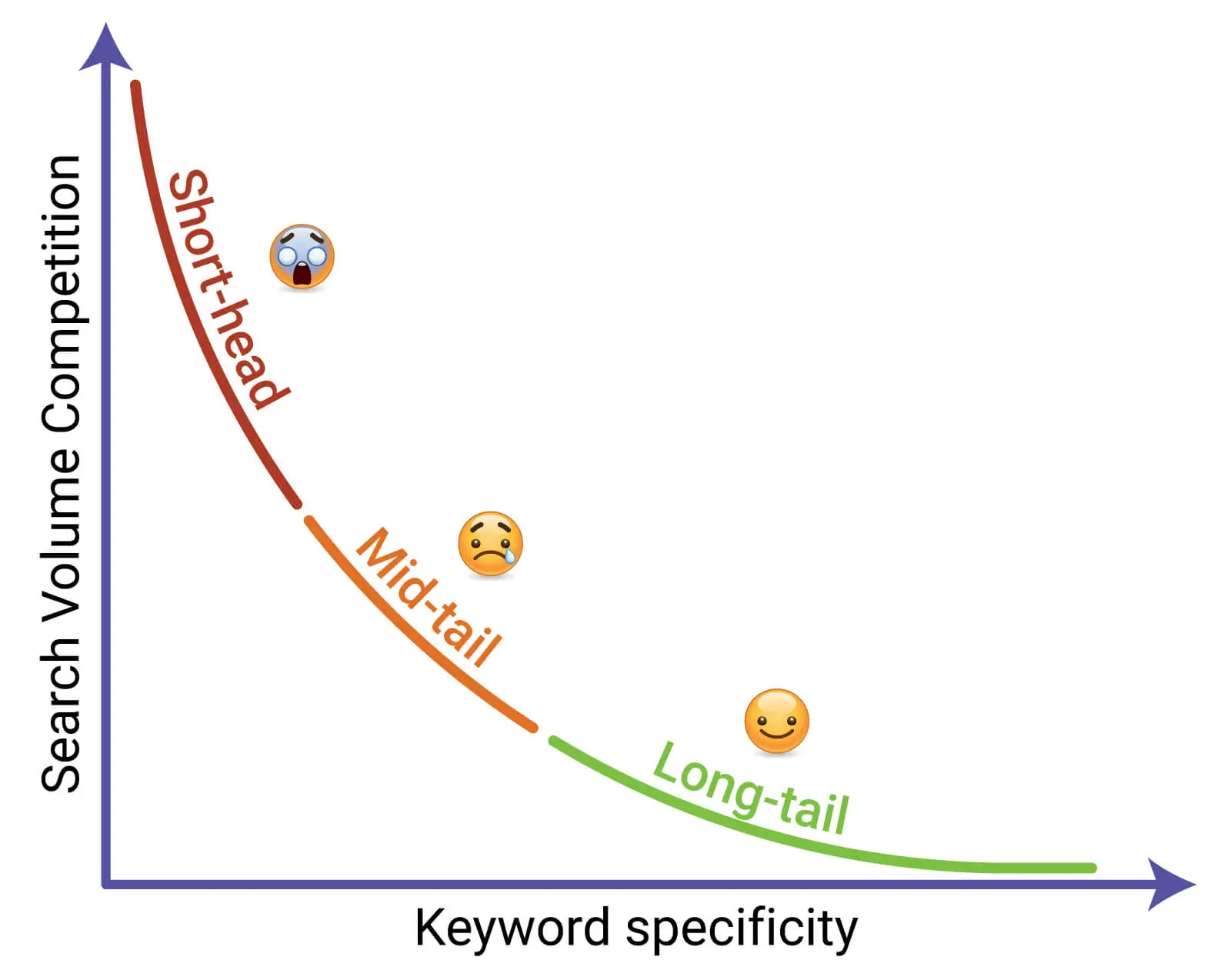
- Attracting Specific Audiences: Long-tail keywords help in attracting a niche audience that is highly specific to your business offerings. For example, instead of targeting the broad keyword “landscaping,” a small business could target “eco-friendly landscaping services in Austin.”
- Lower Competition: These phrases typically face less competition compared to broader keywords. This makes it easier for your content to rank higher on search engine results pages (SERPs).
- Higher Conversion Rates: Users searching with long-tail keywords often have a clear intent, leading to higher conversion rates. They are usually further down the sales funnel and more likely to engage with your content or make a purchase.
- Cost-Effectiveness: Long-tail keywords often have lower cost-per-click (CPC) rates in paid search campaigns, making them a budget-friendly option for small businesses looking to maximize their advertising spend.
- Enhanced Content Relevance: By using long-tail keywords, you can create highly relevant content that aligns closely with what users are searching for, improving the overall quality and value of your website.
- Improved User Experience: Focusing on specific, detailed queries allows you to address user needs more precisely, enhancing the user experience and potentially increasing time spent on site.
- Better Voice Search Optimization: As voice search becomes more prevalent, long-tail keywords mirror the conversational language used in voice queries, helping your content appear in voice search results.
- Facilitates Personalization: Long-tail keywords enable you to tailor your messaging and offers to different segments of your audience, providing a more personalized experience for potential customers.
- Increased Organic Traffic: While each individual long-tail keyword may draw less traffic than its short-tail counterparts, collectively they can drive significant amounts of organic traffic by targeting various specific queries.
- Building Authority in Niche Areas: By consistently providing high-quality content around specific long-tail keywords, your business can establish itself as an authority within niche areas of your industry.
- Adaptability to Market Changes: Long-tail keyword strategies allow for greater flexibility and agility in adapting to shifts in market trends and consumer behavior, ensuring your SEO efforts remain relevant over time.
I could go into great detail for each of these… in fact I will in later posts. 🙂
By focusing on long-tail keywords, you can effectively target niche audiences, reduce competition, and increase the likelihood of conversions.
Developing a Content Strategy Based on Keywords Research Results
An effective content strategy development hinges on the strategic use of targeted keywords. By incorporating well-researched keywords, you can ensure your content aligns with both user intent and SEO optimization standards.
Importance of Using Targeted Keywords:
- Alignment with User Intent: Using keywords that resonate with your audience’s search queries makes your content more relevant and engaging.
- Enhanced Visibility: Targeted keywords help search engines understand your content, improving its chances of ranking higher on Search Engine Results Pages (SERPs).
- Content Relevance: Ensure your articles, blogs, and other content forms address the topics your potential customers are searching for, increasing organic traffic.
Strategies for Optimizing Each Page:
Primary Keywords
Integrating primary keywords into essential areas of your content is crucial for enhancing SEO effectiveness. Focus on incorporating these keywords in the title tags, meta descriptions, and header tags (H1, H2) to ensure search engines recognize the relevance of your content. Additionally, make sure to include primary keywords within the first 100 words of your content to capture both user attention and search engine algorithms right from the start.
Secondary Keywords
Secondary keywords are vital in supporting the primary keyword by providing additional context and relevance. These should be naturally sprinkled throughout the content to avoid keyword stuffing while still reinforcing the main topic. The strategic placement of secondary keywords helps in improving the breadth of search queries your content can satisfy, thereby increasing its reach and impact.
Semantic Keywords
Incorporating semantic keywords involves using related terms and phrases that add depth and context to your content. These related terms enhance the overall relevance by addressing various facets of a topic, which can improve both user engagement and search engine understanding of your content’s subject matter.
Content Structure
Utilizing a clear structure with headings and subheadings helps break down information into digestible sections, making it easier for readers to follow along. This not only aids readability but also assists in maintaining user interest throughout the page. Additionally, consider using multimedia elements such as images and videos that are optimized with alt text containing relevant keywords. This approach not only enriches the user experience but also enhances SEO by providing additional opportunities for keyword integration.
Implementing these strategies effectively on each page on your site will finely tune your site to maximize both user engagement and search engine visibility, ultimately driving sustained growth for your small business.
Local SEO Considerations for Small Businesses
Using location-specific keywords is crucial for small businesses aiming to capture local clientele. When potential customers search for services, they often include their city or neighborhood in the query. For example, a landscaping company in Austin should target terms like “Austin landscaping services” or “landscapers in Austin.”
Strategies for enhancing visibility in local search results include:
- Google My Business (GMB): Ensure your GMB profile is fully optimized with accurate business information, including address, phone number, and operating hours. Regular updates and customer reviews boost credibility.
- Local Citations: Consistent listings on local directories (e.g., Yelp, Yellow Pages) help search engines verify your business’s legitimacy.
- Location-Specific Content: Create blog posts or service pages that cater to local interests and events. This not only targets local keywords but also engages the community.
- Localized Backlinks: Collaborate with local bloggers or news sites to gain backlinks. These localized links signal your relevance to specific geographic areas.
Using these local SEO strategies, you can improve your rankings in local search results, making it easier for nearby customers to find your business.
Ongoing Adaptation of Your Keyword Strategies Over Time
Regular reassessment of your keyword strategies is crucial to stay relevant in ever-changing markets. Market trends and consumer behavior are not static; they evolve, and your keyword research for small business should reflect these changes.
- Market Trends Reassessment: Every few months, revisit your keyword list to ensure it aligns with the latest market trends. This helps in capturing emerging opportunities that can drive traffic and conversions.
- Consumer Behavior Changes: Pay attention to shifts in how customers search for your products or services. Adapting your keywords based on current consumer behavior can provide a competitive edge.
Staying proactive with your keyword strategy ensures that your content remains relevant, engaging, and effective in reaching your target audience.
Key Takaways
Adapting to the ever-changing world of digital marketing is crucial for small business success. Continuously researching keywords helps you stay ahead of market trends and changes in consumer behavior. By using these strategies, you can greatly enhance your online presence, bringing in more targeted traffic and potential customers.
- Keep learning
- Regularly update your keyword strategies
- Focus on aligning your content with current search trends
Being proactive in your keyword research for small business growth ensures that your digital marketing efforts stay effective and relevant. Combining these practices with a well-crafted content strategy can lead to lasting online visibility and growth.
FAQs (Frequently Asked Questions)
What is keyword research and why is it important for small businesses?
Keyword research is the process of identifying and analyzing search terms that potential customers use when looking for products or services online. This process involves understanding the language and phrases that your target audience uses in search engines. For small businesses, keyword research is crucial because it helps optimize websites to attract more organic traffic, improve online presence, and enhance visibility in search engine results pages (SERPs). By targeting the right keywords, small businesses can connect with their audience more effectively, leading to increased engagement, higher conversion rates, and ultimately, business growth.
What are long-tail keywords and how do they benefit small businesses?
Long-tail keywords are specific phrases that typically contain three or more words. They are beneficial for small businesses because they often have lower competition, making it easier to rank higher in search results. By targeting these specific terms, businesses can reach a more precise audience who is likely searching with intent, which can lead to higher conversion rates. Additionally, long-tail keywords help small businesses compete with larger companies by focusing on niche markets. They enable businesses to tailor their content and products to meet the unique needs of their target audience, ultimately resulting in more meaningful customer interactions and enhanced brand loyalty.
Which tools can I use for keyword research?
Popular keyword research tools include Google Keyword Planner, Ahrefs, and Moz Keyword Explorer. These tools provide insights into search volume, competition levels, and help identify relevant keywords for your business.
- Ahrefs: Known for its extensive backlink analysis capabilities, Ahrefs also provides detailed keyword research features. It offers metrics like keyword difficulty, click potential, and related keyword suggestions. We recommend Ahrefs above the others, given how well-maintained their metrics are.
- Google Keyword Planner: Offers data directly from Google, making it a reliable source for search trends and keyword ideas. It allows you to see average monthly searches and competition levels for specific keywords.
- SEMrush: While SEMRush is a major player in the keyword industry, we’ve begun not recommending them. They are very popular with entry-level SEOs and DIYers; however, we’ve discovered very bad metrics on multiple occasions. We’ve stopped using them.
- Moz Keyword Explorer: Offers a user-friendly interface with metrics such as organic CTR (Click-Through Rate) and Priority score that combines other metrics for easier decision-making regarding which keywords to target.
- seoClarity: A comprehensive SEO platform that provides AI-driven insights and tools for keyword research, content optimization, and performance tracking. It offers features such as keyword ranking data, competitive analysis, and content recommendations to enhance SEO strategies.
- BrightEdge: Known for its data-driven insights, BrightEdge provides a robust platform for enterprise SEO management. It offers tools for keyword research, content performance analysis, and market trends to help businesses optimize their search visibility.
- Botify: Focuses on technical SEO with a strong emphasis on crawl optimization and website performance. Botify’s suite includes tools for identifying crawl issues, analyzing site structure, and optimizing large-scale websites for better search engine indexing.
- Clearscope: Specializes in content optimization by providing insights into relevant keywords and topics. It helps create high-quality, search-optimized content by analyzing top-ranking pages and suggesting ways to improve content relevance and comprehensiveness.
By utilizing these tools, businesses can uncover valuable insights into keyword performance and choose the most effective terms to enhance their SEO strategies.
How should I analyze metrics for effective keyword selection?
To select effective keywords, analyze metrics such as search volume to gauge user interest and keyword difficulty to assess competitiveness. Search volume indicates how often a keyword is searched, helping you understand its popularity among users. High search volume can suggest a high level of interest, but it may also mean increased competition. Therefore, balance it with keyword difficulty, which measures how challenging it is to rank for a particular keyword. This will help you choose keywords that are both relevant and achievable for your business. Consider long-tail keywords with moderate search volume and lower difficulty for niche targeting; they often have less competition while still attracting targeted traffic. Additionally, look into metrics like click-through rate (CTR) to evaluate the likelihood of users clicking through when your content appears in search results, and prioritize terms with higher potential CTRs. Analyzing these metrics collectively provides a comprehensive view of keyword viability and helps optimize your SEO strategy effectively.
What is the importance of organizing keywords into buckets?
Grouping keywords into thematic categories or buckets allows for more efficient content development by ensuring that each piece of content has a clear focus and purpose. This methodical organization enhances the ability to target specific audience segments effectively, as it aligns content with the varied intentions and needs of users. By categorizing keywords, businesses can prioritize their efforts on creating content that addresses specific queries and concerns, ultimately leading to higher engagement and better search engine rankings. Additionally, organized keyword buckets facilitate tracking performance and making informed decisions about future content strategies, ensuring that all efforts are aligned with overarching business goals.
Why is ongoing adaptation of keyword strategies necessary?
Regularly reassessing your keyword strategies is essential due to changing market trends and shifts in consumer behavior. Search engines frequently update their algorithms, which can impact the effectiveness of previously successful keywords. Consumer preferences and search habits evolve over time, requiring businesses to stay attuned to these changes to maintain visibility and relevance. By adapting your approach, you can identify emerging opportunities and address any gaps in your current strategy, ensuring that your business remains competitive in the digital landscape. This proactive adjustment helps in capturing new audience segments, enhancing user engagement, and ultimately driving more traffic to your website. Continuously updating your keyword strategies also aids in aligning your content with the latest industry developments and consumer interests, facilitating sustained growth and success.