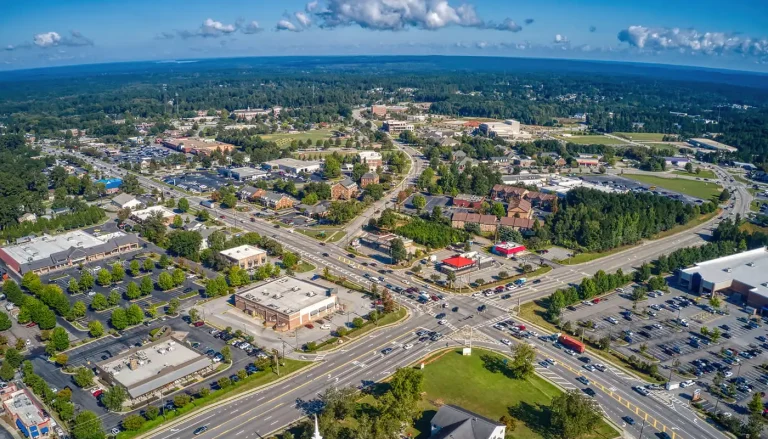
If you are in Cumming, GA and you are trying to budget for a website, the hardest part is not picking colors or writing the About page.
It is figuring out what anything actually costs. Because you will hear numbers that are wildly far apart, and both people will swear they are normal.
One quote comes in at a few hundred dollars. Another comes in at fifteen grand. Then you start wondering if one of them is a scam, or if you are about to overpay, or if you are missing something obvious. Usually it is the third one.
This guide is meant to make the pricing feel less mysterious. Real ranges, what moves the number up or down, and the common ways businesses end up paying twice. Especially local businesses that need the site to rank, convert, and stay stable for more than six months.
What website development usually costs in Cumming, GA (real ranges)

The honest answer is that “a website” is not one product. It is a bundle of decisions. The range is wide because the deliverable is wide.
In Cumming, a basic small business website that is built on a template and lightly customized often lands in the low thousands. If it is a handful of pages, straightforward layout, standard contact form, and you are not asking for custom features, you will usually see quotes in the neighborhood of $1,500 to $4,000.
A custom WordPress website, where the design is built around your brand and the structure is planned for SEO and conversion, tends to start around $4,000 and can move up fast. A lot of good projects for local service businesses end up in the $5,000 to $12,000 range because you are paying for planning, custom layout, performance, mobile behavior, and content help, not just code.
Ecommerce sites are their own category. A simple online store with a limited catalog might land around $6,000 to $15,000, while a more complex store with subscriptions, custom shipping logic, product filtering, integrations, or heavy SEO content can push into the $15,000 to $40,000+ zone.
Then there is web app or mobile app development. If you are building an actual application, not just a marketing site, pricing usually starts in the tens of thousands. A small MVP can be $25,000 to $75,000. A more mature build can climb past that quickly depending on user roles, data, admin dashboards, and integrations.
Why the same “5 page website” can cost $2,000 or $10,000
This is where most confusion comes from. Two teams can both say they are building a five page website, and one is really quoting design plus SEO setup plus copy guidance plus performance work plus a conversion oriented structure. The other is quoting the act of assembling pages.
It is not always malicious. It is just a different definition of the job.
A site can be built to exist, or it can be built to perform. If you need it to bring in leads in Cumming and surrounding areas, that second definition matters. It changes what is included, who touches the project, and how long it takes.
The biggest cost drivers (the stuff that quietly changes the quote)
Custom design vs theme based design
Theme based sites can be perfectly fine, especially early on. But the cost stays lower because you are not paying for original layout systems, custom page sections, and unique design elements. You are picking from what already exists, then adjusting.
Custom design is more time. More rounds. More decisions. It can also improve results because the site is built around how your customers actually think and click, not how a theme author imagined a generic business.
If you are in a competitive service category, custom design often goes hand in hand with conversion rate optimization. That is not just a buzz phrase. It is things like page hierarchy, call to action placement, trust signals, quote forms that do not feel annoying, and the little bits of friction you remove so more people actually contact you.
Content and SEO foundations (the part people underestimate)
A surprising number of websites fail because they launch with thin, vague content. Then the business owner is confused because the site looks good but nothing happens. No calls. No forms. No rankings.
SEO is not just “add keywords.” Real SEO work includes market and keyword research, competitive analysis, on page structure decisions, metadata setup, internal linking strategy, and pages built to match the searches real people type. If you also want blogging, reporting, backlink building, and ongoing content writing, that is its own monthly program, not a one time checkbox.
In other words, a website that is built with SEO in mind costs more up front because someone is doing actual thinking. The payoff is that you are less likely to rebuild later.
Functionality, integrations, and custom plugins
A basic brochure site is mostly pages. Add scheduling, membership logins, gated content, quoting calculators, dynamic service area pages, CRM integration, payment flows, or custom forms, and you are moving into development work that needs testing and maintenance.
Custom WordPress plugins are a big one. They are useful when you need something specific that off the shelf plugins cannot do cleanly. But custom plugin work should be quoted carefully, documented, and built so it can be maintained later. Otherwise, you get the classic situation where one developer can never touch it again without breaking something.
Photography, video, and “brand assets”
Sometimes the website quote is high because the business has no usable assets. No real photos. No logo files in the right format. No brand guidelines. No service descriptions. No reviews collected in a clean way.
If your project includes animated marketing videos, brand storytelling, or even ecommerce product visuals, that can add cost, but it also changes how the final site feels. In some industries, that difference is the entire game.
Hosting, security, and performance
A lot of sites are slow because they are hosted cheaply, overloaded with plugins, and never optimized. The short term savings gets paid back later in the form of lost leads and random issues.
Good WordPress hosting, proper caching, image optimization, and security hardening are not glamorous line items, but they matter. Especially for local SEO and conversion. People do not wait for a slow site anymore, they just hit back.
Pricing models you will see locally (and what they usually mean)
Some teams price fixed projects. Some price hourly. Some offer monthly plans that bundle the build with hosting and ongoing edits.
Fixed pricing can be great if the scope is clear, the deliverables are specific, and the agreement includes what happens when things change. Hourly can be fair when the project is exploratory or includes unknowns, but it needs guardrails so the budget does not drift.
Monthly website plans can be okay too, but you should understand what you are actually renting. Do you own the site? Can you leave and take it with you? Are you paying for real SEO work, like content writing and on page optimization, or just paying for hosting with a fancy label?
Typical line items that should be in a serious quote (even if they are not called this)
A good quote does not just say “website design and development.” It breaks down what you are buying.
You should see discovery and planning. Some level of sitemap or page list. Design rounds. Development. Content population. Responsive testing. Basic training. Launch support. And usually some form of analytics setup so you can measure what is happening.
If SEO is part of the plan, it should be spelled out. Market research. keyword mapping. metadata. local SEO elements. content writing. internal linking. If backlink building, authority links, blogger outreach, press release distribution, or reputation management is included, that should be clearly defined because those terms get thrown around loosely in the industry.
What drives cost in specific industries around Cumming (a quick reality check)
Industry matters because competition matters and content needs vary. A landscaping website is a good example. On the surface, it looks simple. Services, gallery, contact page. But the sites that win usually have location focused pages, strong before and after visuals, clear service packages, and SEO content that matches seasonal searches.
The difference between a landscaping site that gets traffic and one that just sits there is not “having a website.” It is structure, content depth, page speed, and credibility signals. That is why specialized industry website builds often cost more. Not because the pages are magical, but because the strategy is baked in.
How businesses end up paying twice (and how to avoid it)
Paying for a “cheap build” that is not built to be extended
One common pattern is launching fast on a cheap theme with a pile of plugins. It works until it does not. Then you need a new developer to add something, and they tell you the foundation is messy, or the builder is limiting, or the site is slow, or it is not secure.
So you rebuild.
To avoid that, ask a simple question before you sign anything. “If I want to add a new service section, landing pages, and ongoing SEO content over the next year, is this website structure designed for that?” You want a calm, confident yes, not a vague shrug.
Paying for design but not paying for content
A site can look gorgeous and still not rank or convert. If the project budget ignores content, you end up launching with placeholder text or thin pages. Then you pay again later for copywriting, SEO rewrites, and new landing pages.
If you know you need leads, treat content as part of development, not an afterthought. Even better, have your SEO and content plan influence the design from the beginning. That is where collaboration actually matters.
Paying for SEO “setups” that do not include ongoing work
Local businesses get burned here constantly. Someone sells “SEO” but it is really just installing a plugin and filling out a few titles. Then nothing happens.
Real SEO usually includes ongoing content writing, blogging, reporting, and backlink work, plus landing page design and testing if you are running ads. If you are doing Google Ads, AdWords integration and conversion tracking should be part of the plan so you can tell what is working. Otherwise you are spending money blind.
Paying for a website with no documentation and no handoff
If the agency builds the site and disappears, you are stuck. Or worse, you are locked out of your own hosting and accounts.
Make sure you own the domain. Make sure you have admin access. Make sure there is at least a basic handoff that explains how to edit pages, how backups work, and who to contact when something breaks. That is not extra. That is part of a professional build.
A more practical way to budget (think in phases, not one giant number)
If you are not sure what you need yet, you do not have to buy everything at once. A lot of businesses do better with a phased plan.
Phase one is a strong foundation. A clean custom WordPress build, the right pages, good performance, basic local SEO elements, analytics, and a site structure that can grow.
Phase two is growth. Content writing or managed blog services, landing pages, backlink building, conversion rate optimization, and ongoing reporting. This is the part that compounds over time, but only if the foundation is solid.
Phase three is advanced features. Custom plugins, deeper integrations, ecommerce expansion, or even a web or mobile app if your business model needs it.
This is also where a long term strategy matters. Not “we will do SEO.” More like, “here is what we build first, here is what we measure, here is what we improve, and here is how it supports revenue.”
What to ask a web developer in Cumming before you hire them
Ask how they handle SEO and content, specifically
You are not looking for a promise that they can rank you number one. You are looking for evidence that they understand the process. Ask what keyword research looks like, how they approach on page and local SEO, and what they recommend for ongoing content.
If they offer backlink building, authority homepage links, blogger outreach, or press release and reputation management services, ask what that actually includes. What is the quality bar, what is the cadence, and what is reported back to you.
Ask what is custom, what is template, and what tools they use
There is nothing wrong with templates. The issue is when you think you are buying a custom site and you are not. Ask what theme they use, what page builder they use, and whether the site will be easy to maintain without breaking.
Also ask how they handle plugin selection. A site with thirty plugins can be a future problem. Sometimes it is fine, often it is not.
Ask what happens after launch
Do they offer hosting guidance and support, especially for WordPress hosting? Do they handle updates and backups? Do they offer a maintenance plan? If something goes wrong, what is the response time?
A website is not a one time object. It is a living system, even for small businesses.
Where MacMillan Design typically fits in this conversation
If you are comparing quotes, it helps to know what a full service team usually includes.
MacMillan Design tends to sit on the more comprehensive end of the spectrum. Custom WordPress sites, full development for web and mobile apps, custom WordPress plugins, SEO services that go beyond basics, and conversion rate optimization as part of the broader strategy. They also offer content writing and managed blog services, plus marketing support like landing page design and AdWords integration, which matters if the site is meant to produce leads, not just look good.
They also do things that are not always offered by typical web shops, like animated marketing videos for ecommerce or storytelling, plus outreach focused SEO work such as authority link building and blogger outreach. For some businesses, that is overkill. For others, it is exactly what prevents the “pay twice” cycle because the plan is long term from day one.
The quick gut check for your budget
If you just need a clean presence online and you are not in a brutal competitive space, a lower cost build can be totally fine. Just make sure it is stable and editable.
If you need the website to bring in leads consistently in Cumming, you are usually budgeting for more than pages. You are budgeting for strategy, content, SEO foundations, and conversion. That is where the mid range and higher quotes start to make sense.
And if you are building anything with real functionality, like ecommerce that needs to scale, or a web or mobile app, treat it like product development. Because that is what it is.
Closing thought: the cheapest website is the one you do not have to rebuild
A website that costs less but forces a rebuild later is not cheaper. It is just deferred pain, plus lost time, plus lost leads.
So when you are reviewing quotes in Cumming, look past the number. Look for what is included, what is assumed, and what you will need six months after launch when you want more traffic, more conversions, and fewer headaches.
That is the version that actually saves money. Even if the initial quote makes you pause for a second.
FAQs (Frequently Asked Questions)
What is the typical cost range for a basic small business website in Cumming, GA?
In Cumming, GA, a basic small business website built on a template with light customization usually costs between $1,500 and $4,000. This typically includes a handful of pages, straightforward layout, and standard contact forms without custom features.
Why can two quotes for a ‘5-page website’ vary so much in price?
Two teams might both quote for a 5-page website but differ greatly because one includes design, SEO setup, copy guidance, performance optimization, and conversion-focused structure, while the other only assembles pages. The difference lies in building a site to perform versus just existing.
How does custom design impact the cost of a website compared to theme-based design?
Custom design involves creating original layouts, unique page sections, and tailored design elements which require more time and rounds of revision. Theme-based designs are less expensive as they involve adjusting pre-existing templates. Custom designs often improve results by aligning with customer behavior and boosting conversion rates.
What role does content and SEO play in website pricing?
Content and SEO foundations significantly affect pricing because effective SEO requires market research, keyword analysis, competitive study, on-page structuring, metadata setup, internal linking strategies, and pages optimized for real user searches. Investing upfront reduces the need for costly site rebuilds later.
What additional costs should I expect if my website needs custom functionality or integrations?
Adding features like scheduling systems, membership logins, quoting calculators, CRM integrations, payment flows, or custom WordPress plugins increases development complexity. These require thorough testing and maintenance planning to ensure long-term stability and avoid issues with future updates or developer handoffs.
How do hosting and security considerations affect website performance and cost?
Quality hosting with proper caching, image optimization, and security hardening is crucial for fast load times and reliable operation. Though these may not be glamorous expenses upfront, investing in good WordPress hosting improves local SEO rankings and conversion rates by preventing slowdowns and technical issues that can deter visitors.
{“@context”:”https://schema.org”,”@type”:”FAQPage”,”mainEntity”:[{“@type”:”Question”,”name”:”What is the typical cost range for a basic small business website in Cumming, GA?”,”acceptedAnswer”:{“@type”:”Answer”,”text”:”In Cumming, GA, a basic small business website built on a template with light customization usually costs between $1,500 and $4,000. This typically includes a handful of pages, straightforward layout, and standard contact forms without custom features.”}},{“@type”:”Question”,”name”:”Why can two quotes for a ‘5-page website’ vary so much in price?”,”acceptedAnswer”:{“@type”:”Answer”,”text”:”Two teams might both quote for a 5-page website but differ greatly because one includes design, SEO setup, copy guidance, performance optimization, and conversion-focused structure, while the other only assembles pages. The difference lies in building a site to perform versus just existing.”}},{“@type”:”Question”,”name”:”How does custom design impact the cost of a website compared to theme-based design?”,”acceptedAnswer”:{“@type”:”Answer”,”text”:”Custom design involves creating original layouts, unique page sections, and tailored design elements which require more time and rounds of revision. Theme-based designs are less expensive as they involve adjusting pre-existing templates. Custom designs often improve results by aligning with customer behavior and boosting conversion rates.”}},{“@type”:”Question”,”name”:”What role does content and SEO play in website pricing?”,”acceptedAnswer”:{“@type”:”Answer”,”text”:”Content and SEO foundations significantly affect pricing because effective SEO requires market research, keyword analysis, competitive study, on-page structuring, metadata setup, internal linking strategies, and pages optimized for real user searches. Investing upfront reduces the need for costly site rebuilds later.”}},{“@type”:”Question”,”name”:”What additional costs should I expect if my website needs custom functionality or integrations?”,”acceptedAnswer”:{“@type”:”Answer”,”text”:”Adding features like scheduling systems, membership logins, quoting calculators, CRM integrations, payment flows, or custom WordPress plugins increases development complexity. These require thorough testing and maintenance planning to ensure long-term stability and avoid issues with future updates or developer handoffs.”}},{“@type”:”Question”,”name”:”How do hosting and security considerations affect website performance and cost?”,”acceptedAnswer”:{“@type”:”Answer”,”text”:”Quality hosting with proper caching, image optimization, and security hardening is crucial for fast load times and reliable operation. Though these may not be glamorous expenses upfront, investing in good WordPress hosting improves local SEO rankings and conversion rates by preventing slowdowns and technical issues that can deter visitors.”}}]}